Hard Hats
Sort by:
Newest first
Hard Hats
Hard Hats
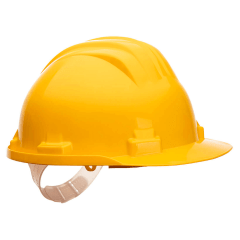
Wherever there is a risk of being injured by falling and flying objects, or where accidental bumps to the head are possible, suitable safety helmets are a must. They can help to prevent everything from life-threatening injuries to minor knocks and scrapes.
Used in a wide range of different industries, to protect against an even wider range of potential hazards, choosing the right safety helmet is an important decision.
Choosing The Right Head Protection
It’s first important to identify the hazards which workers could potentially face in their working environment and the standards with which you need to comply with.
For example, a bump cap will not protect the head from falling objects but does keep you safe from accidentally bumping your head on overhead piping. A safety helmet will protect against most risks, but a helmet is not just a helmet, and there are other features to consider to benefit the user.
Some helmets are lighter than others, and as you might expect, a lightweight helmet is more comfortable for prolonged use. A helmet can also have ventilation for a cooling airflow, as well as a basic plastic cradle or a more comfortable textile webbing cradle which helps to keep it secure on your head.
When upward visibility is required, you can choose a safety helmet with a reduced peak, or for when you need to ensure workers are visible even in low light conditions, reflective surfaces are possible too.
You can additionally choose head protection with a sweatband which may be appropriate to provide extra comfort even when carrying out physical work.
For larger businesses, you may also want every helmet to have corporate branding, or individual personalisation to identify the wearer.
What Do The Standards Say?
When you know the specific risks which workers are in the presence of, you’ll want to ensure the head protection you pick complies with the standards. As an employer, it gives you peace of mind that your employees are appropriated protected and ensures you’re meeting the requirements.
EN 397 specifies physical and performance requirements of industrial safety helmets and is the basic standard they must all comply with. Manufacturers can put forward their products for testing to additional standards, and when they have passed this testing, these marking will appear on the head protection.
Building on the previous standard, EN 1452 includes more onerous tests and requirements, including impact protection to the front, sides, and rear of the head. It also includes performance tests for the retention system, such as chin straps and headbands.
With EN 50365, they are electrically insulated for use on low voltage installations. And when they state, for example, 440V a.c., this means the helmet will protect against short-term, accidental contact with live electrical conductors up to this voltage.
Or when it says -30°C, the helmet will provide some protection when worn in environments at or above this temperature.
LD states that the helmet provides some resistance to lateral compressive (non-impact) loads, while MM means they will stand up to molten metal splashes.
For industrial bump caps, the standard they must meet is EN 812, which means it will give protection against bumps caused by walking into hazardous projections.
Mountaineers are looking out for standard EN 12492, while to comply with standards in regards to reflectivity, it’s EN 12899.
Looking After and Replacing Head Protection
When it comes to cleaning your head protection gear, washing with soap and water, and then drying with a soft cloth, is the best way of looking after it. Avoid using abrasive substances or solvents, and chemicals will affect the integrity of the equipment. For this reason, avoid storing safety helmets in direct sunlight as well.
The wearer should regularly inspect their head protection, looking for significant damage. When it has anything more than superficial abrasions or scuffing to the shell, it must be replaced.
You’ll notice that all helmets are marked with the quarter or month and year of manufacture. This is because it is recommended that no helmet should be in use five years after manufacture.